BASEES is deeply saddened to announce the passing of its former President, Professor Peter Waldron.
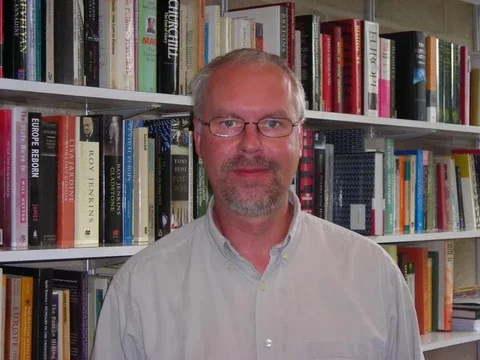
Peter Waldron, 1956-2026
The British Association for Slavonic and East European Studies (BASEES) is deeply saddened by the death of Professor Peter Waldron, former President of the Association, whose distinguished scholarship, academic contributions and commitment to the study of Slavonic and East European Studies will be remembered with lasting esteem.
Peter Waldron, Emeritus Professor of Modern History at the University of East Anglia (UEA) and former president of the British Association for Slavonic and East European Studies (BASEES), passed away after a period of illness this summer at the age of 70. A dedicated historian, author, and mentor, he combined intellectual distinction with an unusual modesty, making a lasting contribution to the study of late Imperial Russia while shaping the lives and careers of generations of students and colleagues.
Born in 1956, Peter studied at the School of Slavonic and East European Studies (SSEES), graduating in the late 1970s before undertaking his doctoral research at the same institution under the supervision of the indomitable Professor Olga Crisp. During this time, he also spent what would prove to be a fondly remembered year attached to Leningrad State University, enjoying all the experiences of a Soviet-era dormitory, as part of the Anglo-Soviet student exchange programme. Following his PhD, he worked briefly outside academia for an import-export agency before embarking on an academic career that included appointments at Durham University, University College Cork, and the University of Sunderland, where he served as Head of Department.
Peter joined the School of History at UEA in 2007. Building on UEA’s longstanding expertise in Russian and Soviet history, he developed a rich curriculum in the field. Together with Matthias Neumann, he taught the hugely popular special subject ‘Stalin and Stalinism’ for many years, alongside various modules on imperial Russian and Soviet history, and designed the innovative MA course ‘Modernity in Russia’.
Peter’s remarkable qualities as a teacher were evident from the outset at UEA. His humility meant that students could take time to appreciate the full extent of his scholarly achievements. His teaching stood out for bringing the past to life through primary sources, and his carefully assembled documentary materials continued to inform former students who became historians and educators. His gift for making complex historical problems accessible without sacrificing analytical depth was equally evident in his writing, where clarity, precision and concision were hallmarks of his work.
Peter’s ‘first wave’ of publications included assessment of Russia’s relationship with Finland, reflecting also his enjoyment of the National Library in Helsinki. Among these were ‘Stolypin and Finland’ (The Slavonic and East European Review, 1985) which offered pathbreaking analysis of the relationship between the Russian premier and the empire’s Finnish subjects. Peter also showed a deep interest in constitutional change in Russia, reflected in fine articles concerning civil rights and religious minorities. These are ‘Religious Reform after 1905’ (Oxford Slavonic Papers, 1987) and, in a book co-edited by his supervisor alongside Linda Edmondson, ‘Religious Toleration in Late Imperial Russia’ (Oxford, 1989). Peter also worked extensively on primary source collections, reflecting his excellence as an educator – foremost were Octobrists to Bolsheviks (1984), and The Emergence of the Modern Russian State (1988), both edited with Martin McCauley of SSEES.
Peter took a break from academia for several years, returning when he found the collapse of the Soviet Union ‘too interesting’ to ignore. After this was a ‘second wave’: a series of books that provided an accurate assessment of a host of issues in late imperial Russia, especially concerning the era of politics and parliament. There was an outstanding article on Emergency Legislation in late imperial Russia (Revolutionary Russia, 1995). His first monograph, Between Two Revolutions (1998) is an adaptation of his doctoral thesis, focusing on the premiership of Petr Stolypin and his fall. Two textbooks are still among the best on the late imperial period – these are The End of Imperial Russia, 1855-1917 (1997) and Governing Tsarist Russia (2007). Around this time, Peter also contributed to several major collaborative projects, including the Cambridge History of Russia (2006) and the multi-volume series Russia’s Great War and Revolution (2014-onwards).
Not wishing to be intellectually constrained by the era’s sometimes moribund politics, Peter made a shift towards a more thoroughgoing study of art and culture in Russian history in the latter stages of his career. An example of this interest was the richly illustrated volume Russia of the Tsars (2011), which includes facsimile documents. This was followed by Radical Russia: Art, Culture and Revolution (2017), a study of modernist art in revolutionary Russia produced in collaboration with two talented doctoral students, Jamie Freeman and Ryan Hale. Characteristically, Peter was keen not to take all the credit for the volume, making his intellectual debts to his students clear.
Accompanying this was an exhibition of the same name, which Peter curated at the Sainsbury Centre for Visual Arts as part of its Russia Season marking the centenary of the Russian Revolution. This exemplified his commitment to making the cultures of the Russian empire and the Soviet Union accessible to wider audiences and fostering collaborative scholarship. The exhibition explored the striking contrasts between the opulence of Fabergé objects, reflecting the wealth and tastes of Russia’s elite, and the radical art that sought to reach a much wider public. Featuring works by artists including Natalia Goncharova, Kazimir Malevich and Wassily Kandinsky, it illuminated the energy and experimentation of Russian art in the final years of Tsarism and the revolutionary period that followed. By bringing these contrasting artistic traditions into dialogue, the book and exhibition offered visitors a fresh perspective on the cultural transformations of this pivotal period in history.
Many students on Peter’s MA course went on to undertake PhDs under his supervision. He was an exemplary doctoral supervisor, challenging his students to flourish intellectually, think critically and develop as independent scholars. In doing so, he helped train the next generation of historians of Russia and the Soviet Union. Several of his former students, including George Gilbert and Andy Willimott, went on to secure permanent academic posts, establishing their own reputations through important publications and making significant contributions to the discipline. Peter remained a source of encouragement and support as their careers developed, and his influence extended through their teaching, research and mentorship of their own students.
Peter also made a substantial contribution to the wider scholarly community. A long-standing and active committee member of BASEES, he served as its President from 2013 to 2016. Under his leadership, the association embarked on a programme of internationalisation, and its annual conference grew into one of the world's largest area studies conferences in the field. In 2019, Peter led BASEES’s successful bid to host the 2025 World Congress of the International Council for Central and East European Studies (ICCEES) in London.
Retirement did little to diminish Peter’s engagement with his subject. He continued to publish, remained actively involved in the field and offered unstinting support to his former doctoral students as they developed their careers. His commitment to the next generation extended beyond academia. He became an engaged trustee of the award-winning Papillon Project, established by one of his former PhD students, Matt Willer BEM, which promotes sustainable living and environmental awareness among young people through the development of school allotments.
As a colleague, mentor and friend, Peter was kind, generous and wholeheartedly dedicated to supporting his students and colleagues. His modesty sat alongside formidable scholarly achievement, and his intellectual curiosity remained undiminished throughout his career. His legacy will endure not only through his scholarship, which continues to illuminate Russia's history, but also through the students, colleagues, and friends whose lives and careers he shaped. His generous bequest to the Royal Historical Society, which supports the research of future generations of historians, fittingly reflects his lifelong commitment to the vitality and future of historical scholarship.